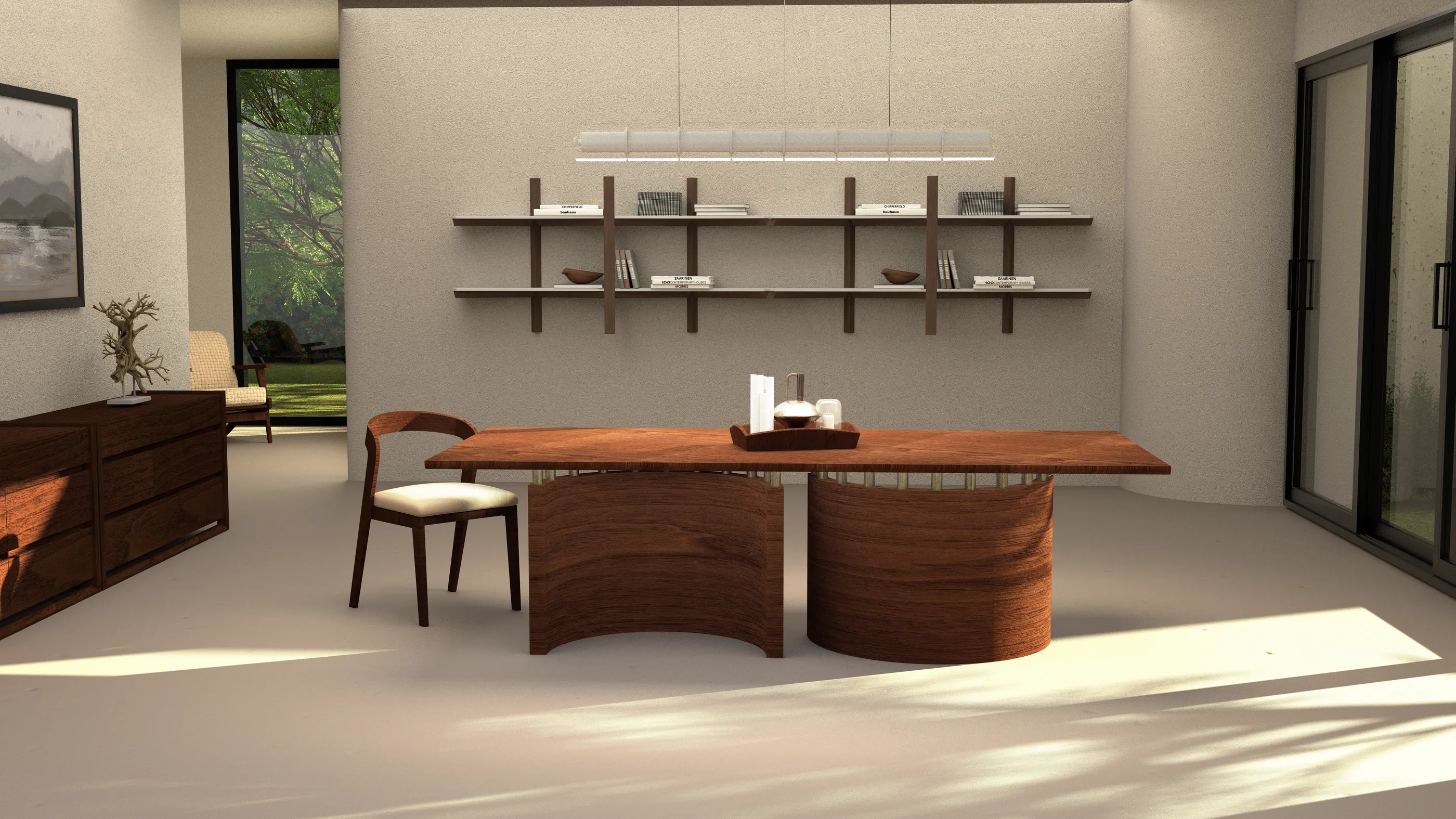
"Ronchamp Dining Table" draws inspiration from Le Corbusier's iconic Notre-Dame du Haut in Ronchamp, France. The design reflects the architectural language through the bold, curved base elements that mirror the chapel's fluid geometry. The curved legs echo the chapel's strong, organic forms, while the tabletop reflects the wide, sheltering gesture of its roof.
The leg design, using cylindrical supports with a different material, echos the chapel's strong vertical rhythm and sense of groundedness. Ronchamp Dining Table is a design that merges form and function, architecture and furniture; rooted in one of modern architecture's most iconic works.
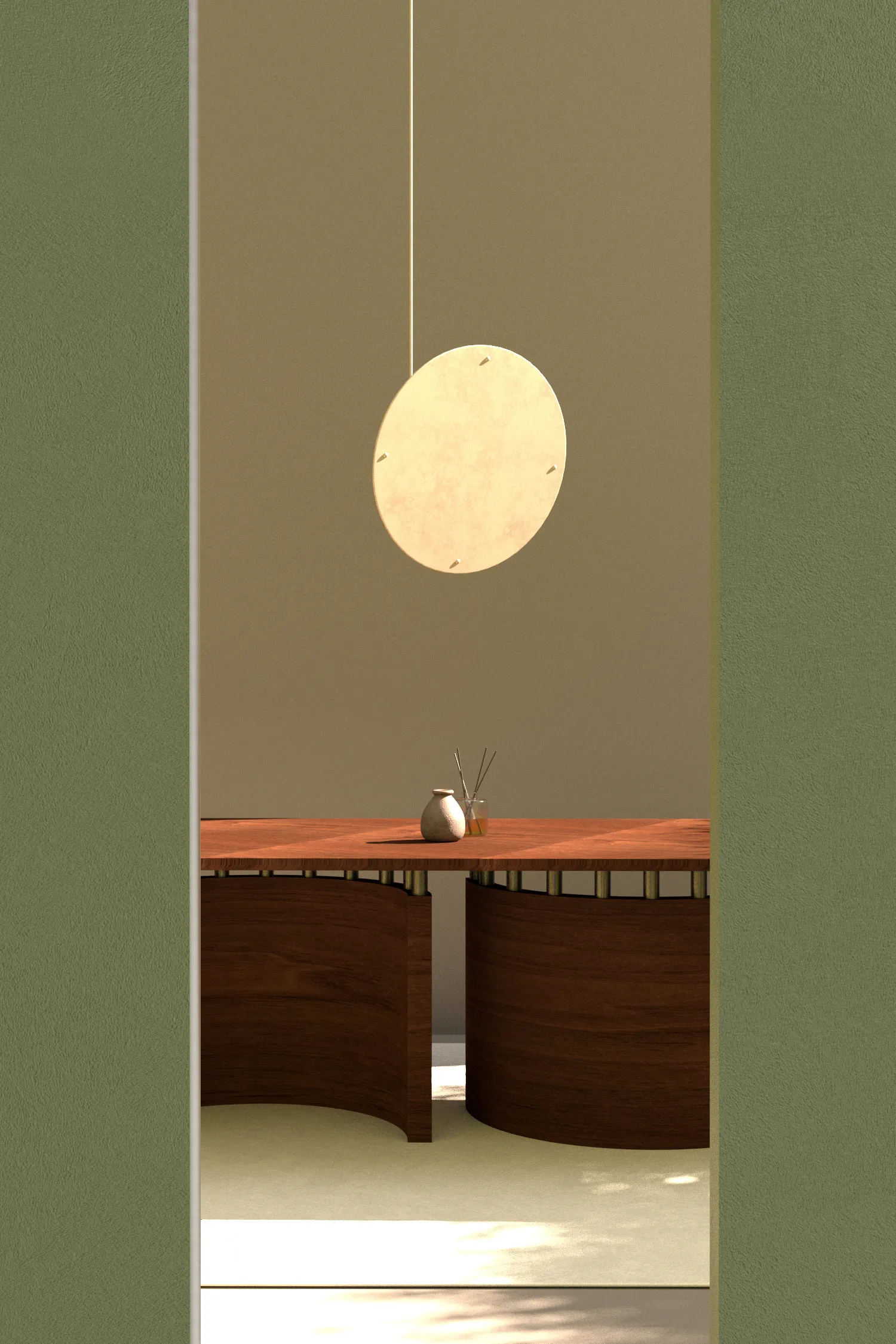
Framed through a narrow architectural aperture, the Ronchamp Dining Table becomes a quiet focal point. Its curved timber base and rhythmic brass supports create a dialogue of weight and lightness.
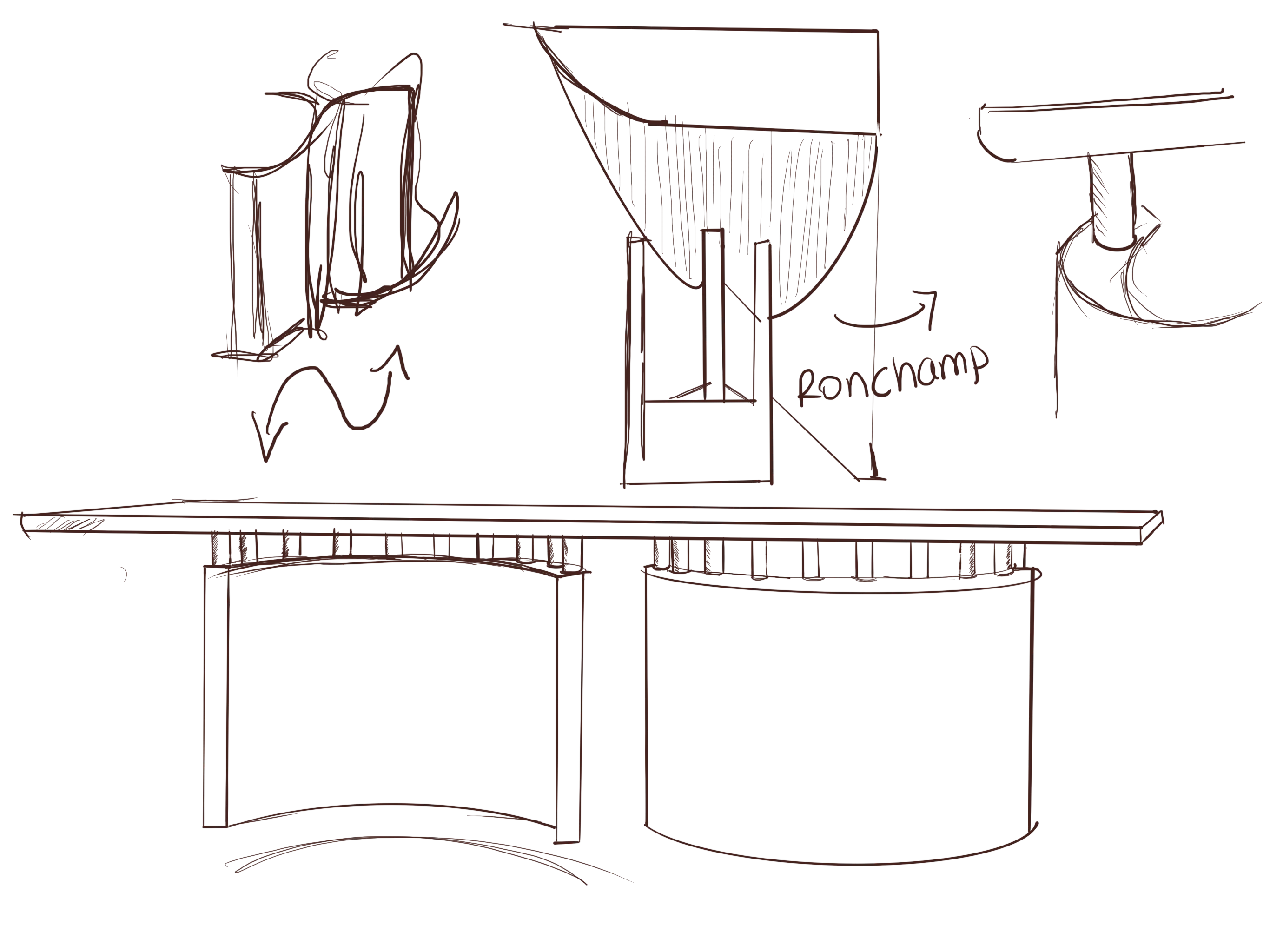
Ronchamp Dining Table interprets the architectural language of Le Corbusier's Notre-Dame du Haut through furniture. The wide, sheltering tabletop reflects the chapel's roof gesture, while the curved base echoes its fluid, organic forms. Preliminary sketches explore the dialogue between curved forms and linear supports. Lines are drawn to understand rhythm, weight, and gesture, reflecting the chapel's organic vocabulary in miniature. Iterations focus on the relationship between grounded solidity and the lightness of slender supports, translating architectural essence into tangible, human-scale proportions.
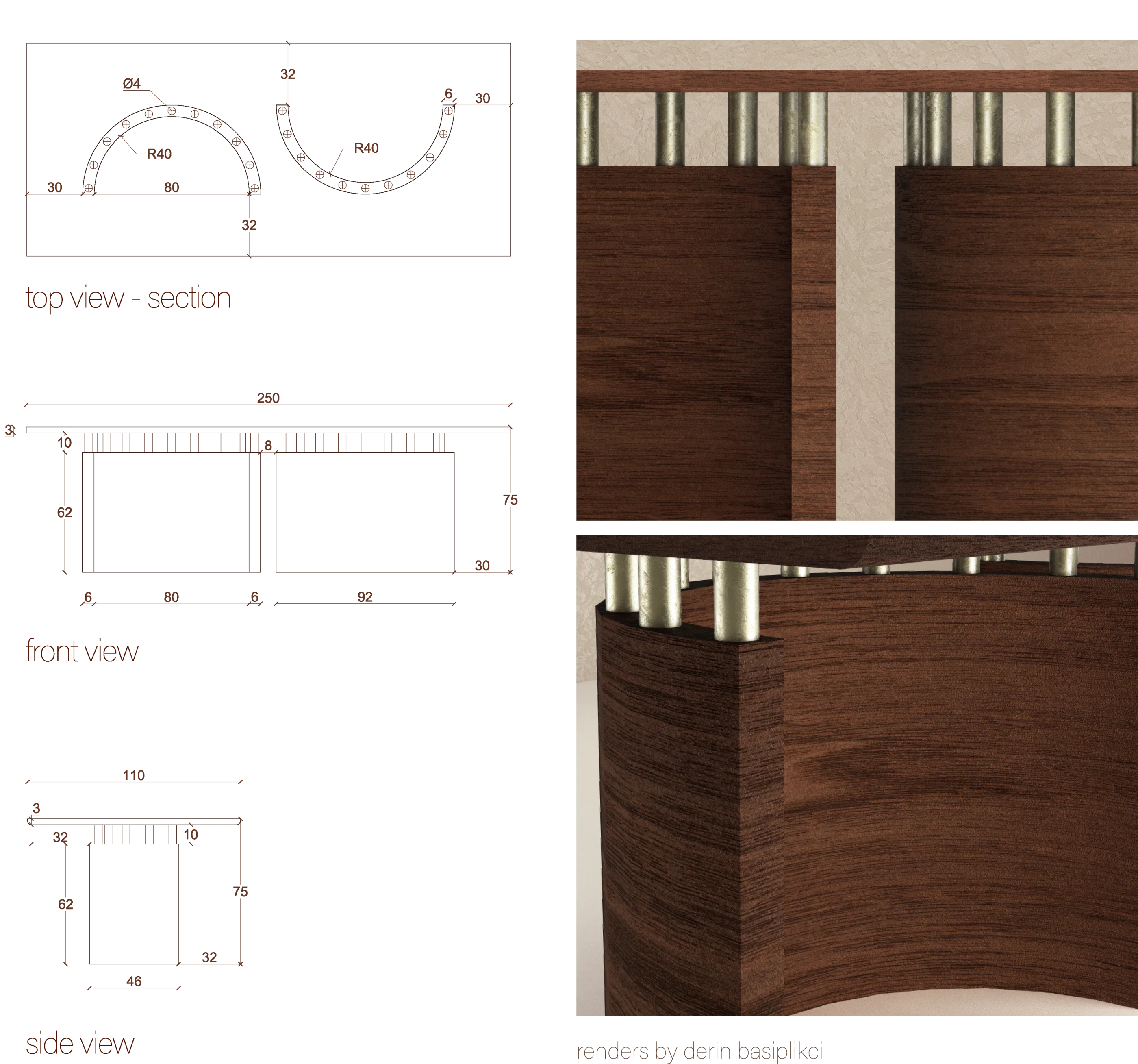
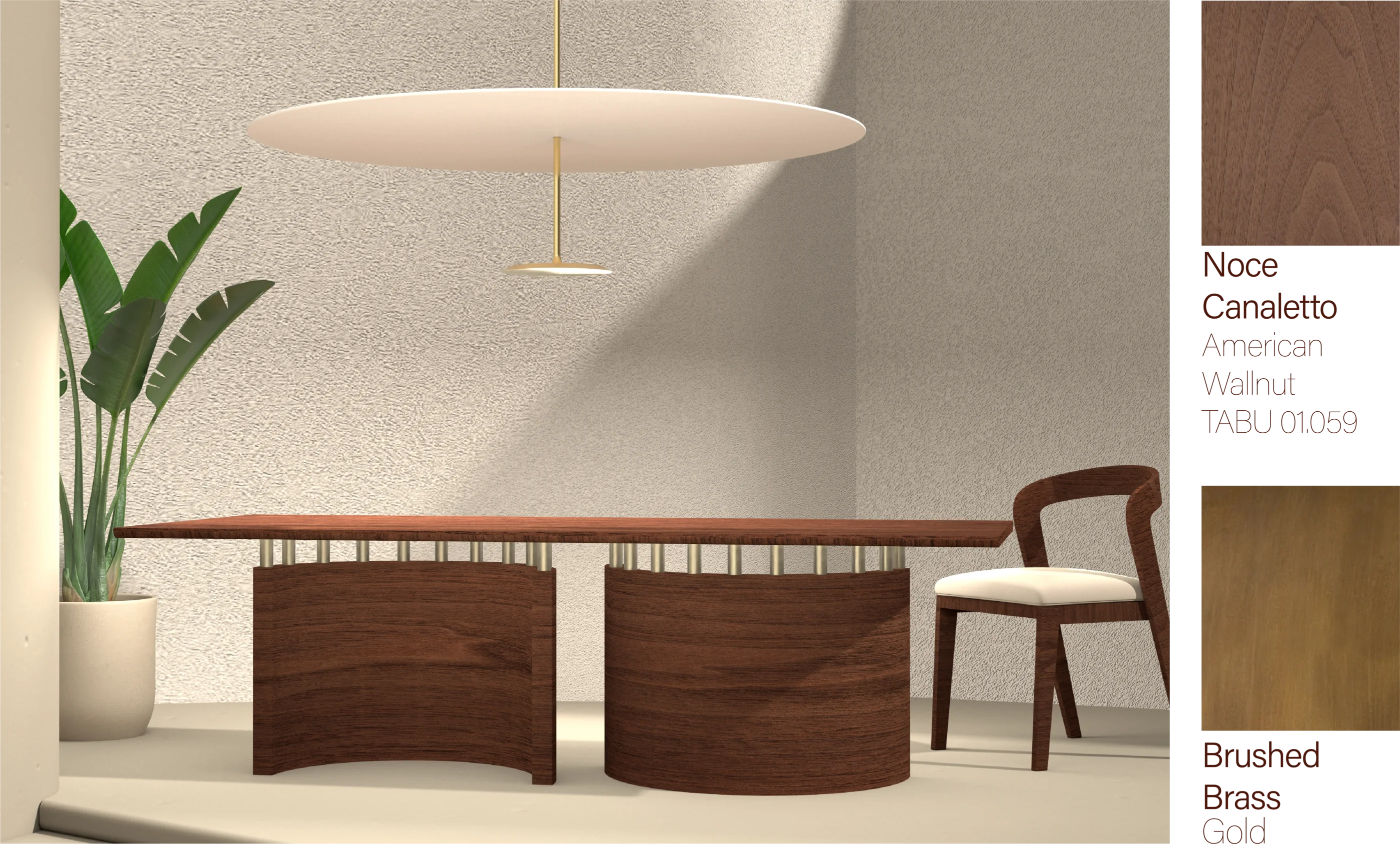
The Ronchamp Dining Table is resolved through a careful balance of mass, rhythm, and tactility. Its base consists of two symmetrical semicircular volumes, finished in TABU 01.059 veneer to maintain continuous grain flow and emphasize the fluid geometry of the chapel's walls. Vertical tambour texture softens the base, while a 12-point array of brushed brass cylindrical supports per base introduces subtle interstitial gaps, creating a sense of lightness beneath the heavy tabletop.
Roncham Dining Table accommodates 6–8 guests. Every junction, from timber to brass, is intentionally considered, harmonizing tactile warmth with precision detailing. The result is a piece that is structurally rigorous yet quietly expressive, where architectural intent and human-scale functionality coexist.
The material palette of the Ronchamp Dining Table is a deliberate dialogue between organic warmth and architectural precision. The primary body is crafted from Noce Canaletto, an American Walnut chosen for its deep, resonant grain and velvet-like finish. Contrasting this natural mass, an array of Brushed Brass Gold cylindrical supports introduces a refined metallic luster. These spacers lift the tabletop, creating a subtle shadow gap that allows light to pass through the structure—a nod to the ethereal lighting of modern architecture.
The Ronchamp Dining Table reinterprets the presence of Le Corbusier’s Notre-Dame du Haut at human scale, translating its sculptural curves and architectural rhythm into furniture. The wide, sheltering tabletop and curved timber base create a grounded, sculptural form, while slender brass supports introduce subtle moments of lightness and shadow. The design balances solidity with openness, material warmth with precision, shaping a quiet atmosphere where structure and form are experienced as spatial gestures rather than mere function.